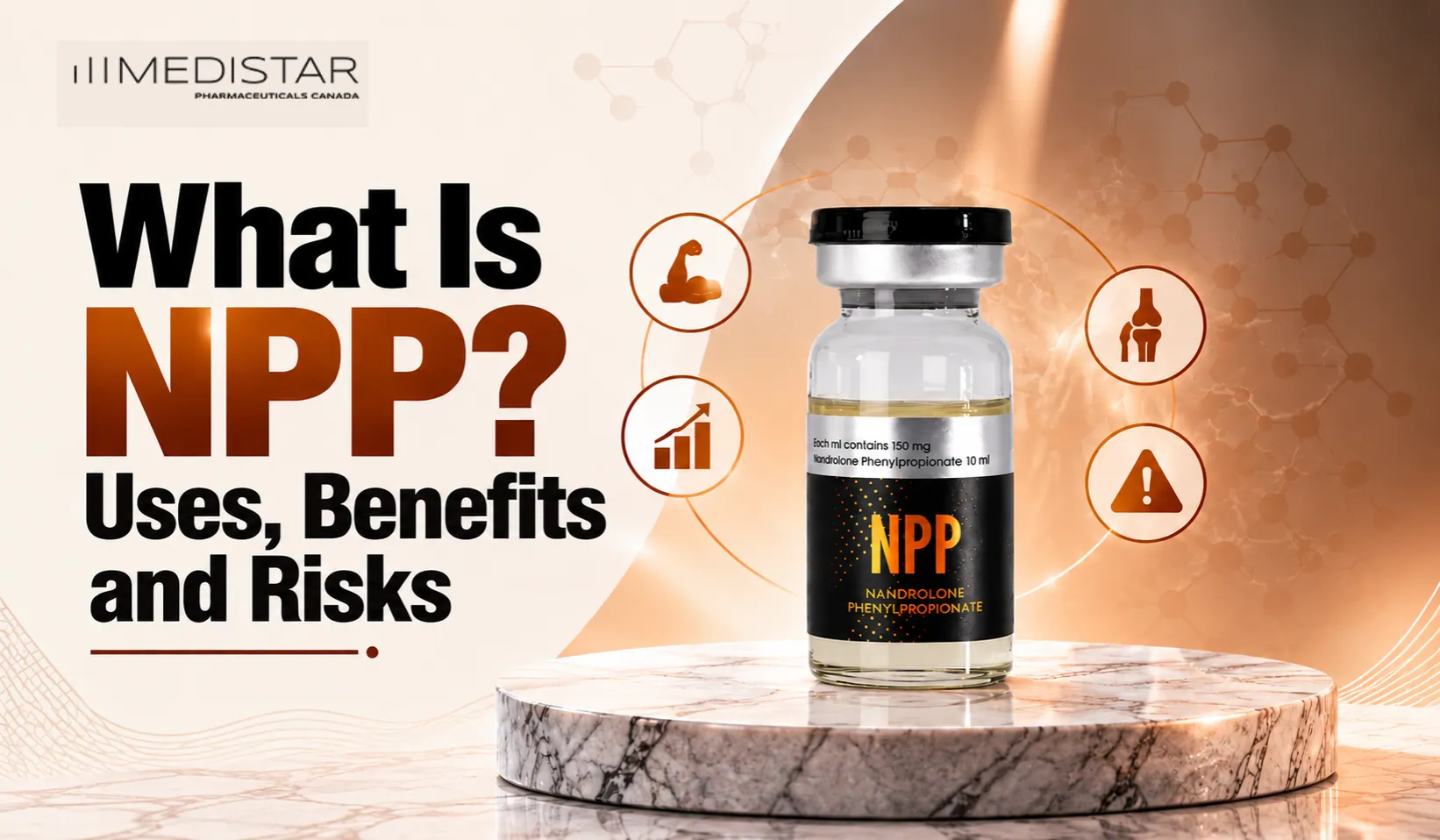
Nandrolone is one of the most studied anabolic steroids in medical history, and NPP, short for Nandrolone Phenylpropionate, is its faster-acting form. Originally developed for therapeutic use, it is now better known in strength and physique circles, which has made it a frequent subject of questions, myths, and misinformation.
In this guide, we explain what NPP is, how it works, its medical uses, its potential benefits, and the risks worth understanding. For product specifications and availability, visit Buy NPP Online Canada.
What Is NPP (Nandrolone Phenylpropionate)?
NPP is an injectable anabolic-androgenic steroid. The active hormone is nandrolone, also called 19-nortestosterone, which is structurally very similar to testosterone but missing one carbon atom. That small change gives nandrolone stronger muscle-building (anabolic) effects and weaker androgenic effects than testosterone.
The “phenylpropionate” part is an ester, a chemical tail that controls how quickly the hormone is released. Phenylpropionate is a short ester, so NPP acts faster and clears the body sooner than nandrolone decanoate (often called Deca), the longer-acting and better-known version. NPP was first introduced in the late 1950s, making it one of the oldest anabolic compounds still discussed today.
How NPP Works in the Body
Once injected, nandrolone binds strongly to androgen receptors in muscle and bone, where it increases protein synthesis and nitrogen retention, two key drivers of muscle growth and repair.
Nandrolone behaves differently from testosterone in a few important ways:
- Weaker DHT effect: instead of converting into potent DHT, nandrolone converts into a much weaker compound, which is why it tends to cause less scalp and skin stimulation.
- Lower estrogen conversion: it converts to estrogen far less than testosterone does.
- Progestin activity: nandrolone also acts on progesterone receptors, which can raise prolactin and contribute to some side effects.
- Hormone suppression: like all anabolic steroids, it signals the brain to cut back the body’s own testosterone production.
NPP vs Deca: Key Differences
NPP and Deca both deliver the same active hormone, nandrolone. The difference lies in the ester attached to it, which changes how quickly the hormone is released and cleared.
| Feature | NPP | Deca |
| Ester | Phenylpropionate (short) | Decanoate (long) |
| Approximate half-life | About 2 to 3 days | About 6 to 12 days |
| Onset of effects | Faster | Slower |
| Clearance after stopping | Faster | Slower |
| Water retention | Often reported as lower | Often reported as higher |
Because the active hormone is identical, the overall effects and risks of NPP and Deca are very similar. The main difference is timing.
How Long Does NPP Stay in the Body?
With a half-life of roughly two to three days, NPP leaves the bloodstream much faster than Deca. However, nandrolone’s breakdown products, especially a metabolite called 19-norandrosterone, can remain detectable in urine tests for months, particularly after longer use. This long detection window is one reason nandrolone is among the most frequently reported substances in sports doping cases.
Historical Uses of Nandrolone
Nandrolone has a long history of therapeutic use dating back to the 1950s, although it is used far less often today as newer treatments have emerged. Historically, it has been used for:
- Anemia: particularly anemia linked to kidney disease, because nandrolone stimulates red blood cell production.
- Muscle wasting: in conditions such as HIV-related weight loss and chronic illness.
- Osteoporosis: to help support bone mineral density in some patients.
- Recovery support: in certain cases of severe injury, burns, or surgery-related muscle loss.
In those settings, nandrolone was given in controlled amounts with regular testing and supervision, which is very different from unsupervised use.
Potential Benefits of NPP
Based on decades of research and reported effects, potential benefits include:
- Muscle growth and strength: high anabolic activity supports lean muscle gains, especially with resistance training.
- Faster recovery: improved protein synthesis may help muscles repair between sessions.
- Joint comfort: some research suggests nandrolone supports collagen synthesis, and users often report less joint discomfort, though evidence is limited.
- Bone density: nandrolone has been studied for its positive effects on bone mineral density.
- Red blood cell production: helpful in cases of anemia, though it becomes a risk at high levels.
Compared with Deca, NPP’s shorter action means effects begin and fade faster. To see how this compares with testosterone-based approaches, read our guide to Testosterone for Bodybuilding.
NPP Risks and Side Effects
NPP carries real health risks, many of which increase with dose and length of use:
- Suppressed natural testosterone: this can cause fatigue, low mood, and reduced libido, and recovery after stopping can take months.
- Sexual dysfunction: often nicknamed “Deca dick,” erectile problems and low libido are linked to suppressed testosterone, low DHT activity, and raised prolactin.
- Prolactin and breast tissue: progestin activity may contribute to gynecomastia and, in some cases, nipple sensitivity.
- Heart and blood pressure: Nandrolone can lower HDL cholesterol, raise blood pressure, and, with long-term use, have been linked to thickening of the heart muscle.
- Thicker blood: elevated red blood cell counts increase the risk of clots.
- Fertility: sperm production can drop significantly.
- Mood changes: irritability, anxiety, or low mood are reported.
- Virilization in women: deepened voice, body hair growth, and other changes that may be permanent.
Because testosterone suppression drives many of these effects, our article on the role of testosterone in men’s health offers useful context.
Common Myths About NPP
NPP is surrounded by popular claims that don’t always match the evidence:
- Myth: NPP is mild because it’s less androgenic. Its weaker androgenic effects don’t make it low-risk. Hormone suppression, sexual side effects, and heart-related changes remain significant.
- Myth: low estrogen conversion means no breast tissue issues. Nandrolone’s progestin activity and its effect on prolactin can still contribute to gynecomastia.
- Myth: a shorter ester is safer. The ester only changes timing. The hormone and its risks are the same as Deca.
- Myth: NPP repairs joints. Some users report joint comfort, but evidence is limited, and it does not heal injuries.
- Myth: natural testosterone bounces back quickly. Recovery varies widely and can take months, especially after longer use.
Legal Status and Safety Considerations
In Canada, nandrolone is a Schedule IV controlled substance under the Controlled Drugs and Substances Act and is available only by prescription. In sport, it is banned by the World Anti-Doping Agency, and its metabolites can remain detectable in drug tests for months after use.
Several safety factors are worth understanding:
- Health monitoring: The blood markers most often used to track androlone’s effects include testosterone, prolactin, lipids, blood count, liver function, and blood pressure.
- Higher-risk groups: people with heart, liver, or blood pressure conditions face greater risks, and the effects on fertility, young people, and tested athletes are especially significant.
- Product quality: unregulated products may be mislabeled, underdosed, or non-sterile, which adds risks beyond the compound itself.
Our Natural Ways to Boost Testosterone guide covers non-pharmaceutical approaches to hormone health.
Conclusion
NPP is a fast-acting form of nandrolone with a long history of therapeutic use for anemia, muscle wasting, and bone loss. Its strong anabolic effects explain its popularity, but it also brings serious risks, from hormone suppression and sexual dysfunction to heart and fertility concerns. At Medistar Canada, we believe clear, honest information is the foundation of every informed health decision.
Disclaimer: This content is for informational purposes only and is not medical advice. Always consult a healthcare professional before using any steroids, SARMs, or supplements. Use products responsibly and in accordance with Canadian laws.
Frequently Asked Questions
1. What is NPP?
NPP is Nandrolone Phenylpropionate, a short-acting injectable form of the anabolic steroid nandrolone.
2. What is the difference between NPP and Deca?
Both contain nandrolone. NPP uses a short ester, so it acts and clears faster, while Deca (nandrolone decanoate) is longer-acting.
3. What has nandrolone historically been used for?
Nandrolone has been used to treat anemia from kidney disease, muscle wasting, osteoporosis, and some recovery-related muscle loss.
4. What are the potential benefits of NPP?
Potential benefits include muscle growth, faster recovery, improved bone density, and possible joint comfort.
5. What are the common side effects of NPP?
Common side effects include testosterone suppression, low libido, erectile problems, raised prolactin, cholesterol changes, and mood changes.
6. What is “Deca dick”?
It is a nickname for erectile dysfunction and low libido linked to nandrolone, caused by suppressed testosterone, low DHT activity, and raised prolactin.
7. Can NPP affect fertility?
Yes. It can significantly reduce sperm production, and recovery after stopping may take months.
8. Does NPP affect heart health?
It can lower good cholesterol, raise blood pressure, and, with long-term use, have been linked to heart muscle thickening.
9. Is NPP legal in Canada?
Nandrolone is a Schedule IV controlled substance in Canada and is available only by prescription.
10. Who faces higher risks with NPP?
People under 18, women (due to virilization), people with heart or liver conditions, men hoping to have children, and tested athletes face the greatest risks.